Leading image processors rely on our experience in optical system design
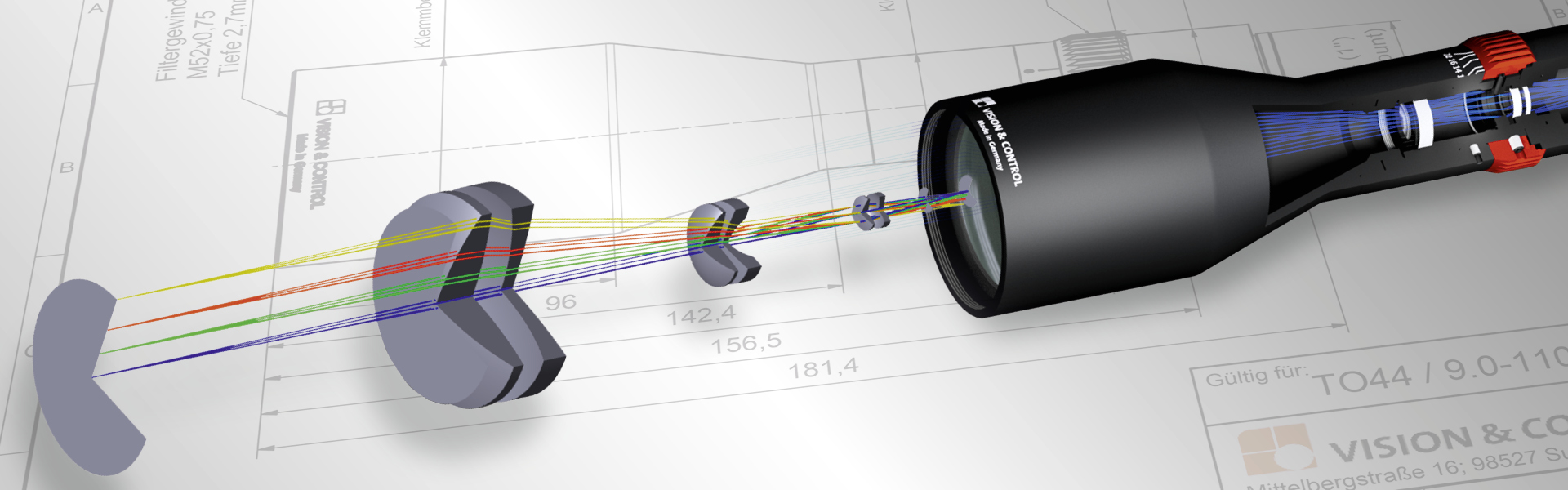
Our comprehensive portfolio of optical systems reflects our broad range of technological experience. If our standard products do not meet all your requirements, we will use this expertise to your advantage and will be pleased to work with you on customized optical systems.
Concept phase
In this initial phase, we develop an initial specification for your idea, assess its feasibility and draw up a preliminary design for the optical system. Specifically, the concept phase involves the following:
1. Refining the specifications
2. Feasibility assessment based on optical and mechanical design studies.
3. Tolerancing, material identification, identification of test criteria and required test fixtures
4. Cost estimation for series production and, where applicable, for prototypes
If your idea is feasible and the concept meets your requirements, we proceed to the final technical design.
Production of physical prototypes
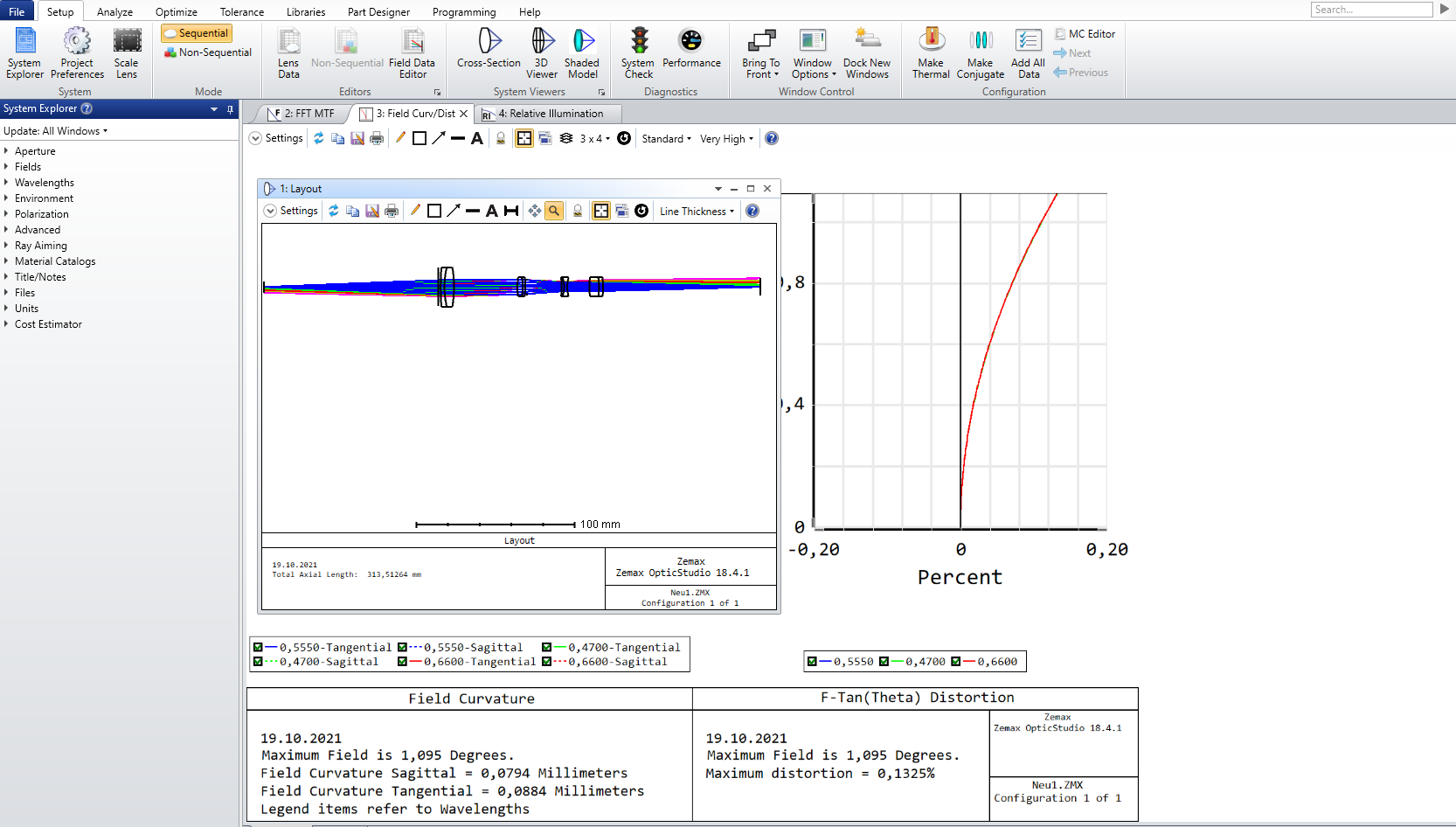
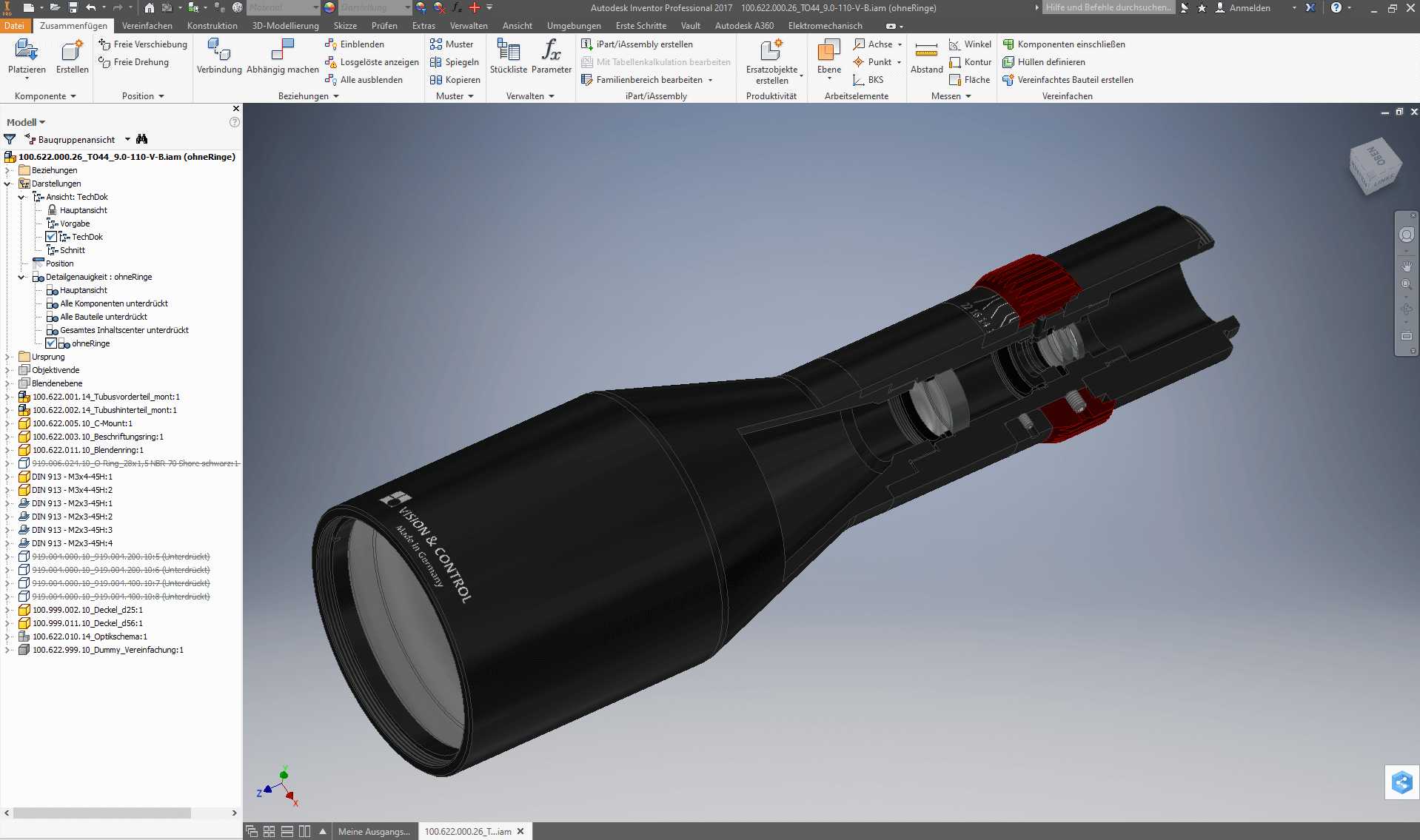
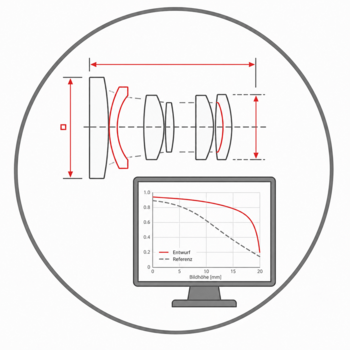
Thanks to our many years of experience and excellent simulation tools (Ansys ZEMAX OpticStudio 2026, Autodesk® Inventor®), the performance parameters can often be predicted very accurately.
In consultation with you, this phase may be omitted if necessary.
If required, several prototypes are produced so that they can also be tested in your own system.
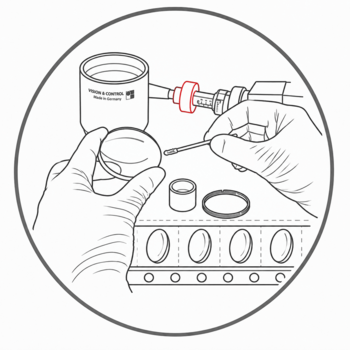
Production handover and series production
We turn your idea into series-production products. This phase involves the handover to the production department and the approval for series production.
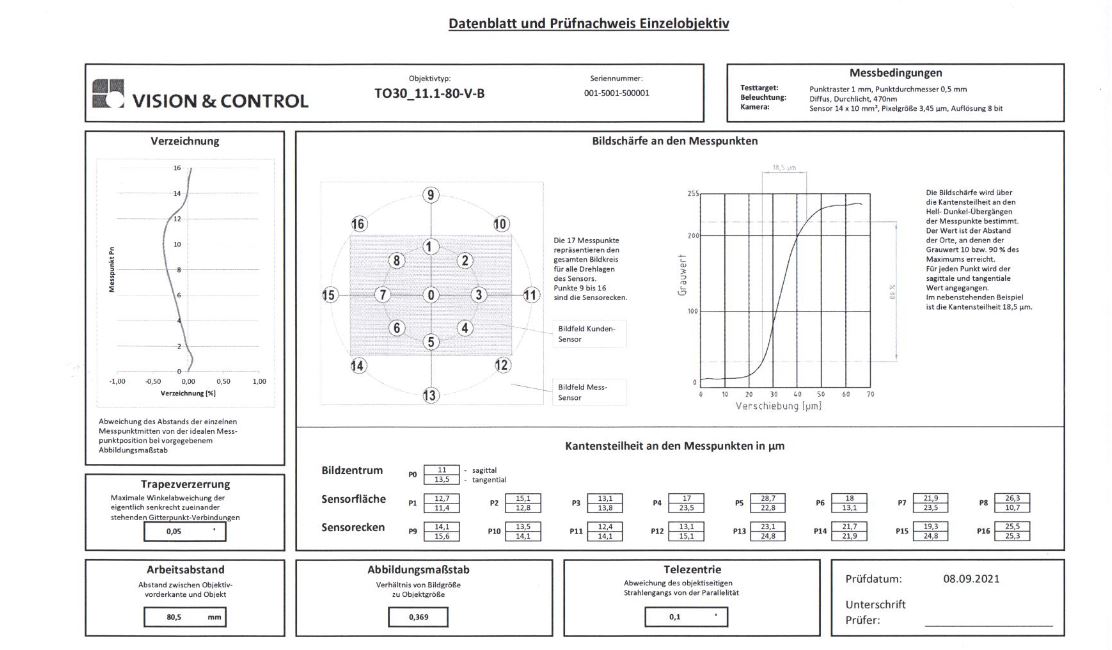
Complete documentation: All necessary technical drawings for both the optical and mechanical components are produced to serve as the basis for manufacturing. The inspection criteria for production acceptance are defined.
‘Made in Germany’ production: Thanks to our dedicated staff and well-established supply chains, your optical systems are available on schedule.
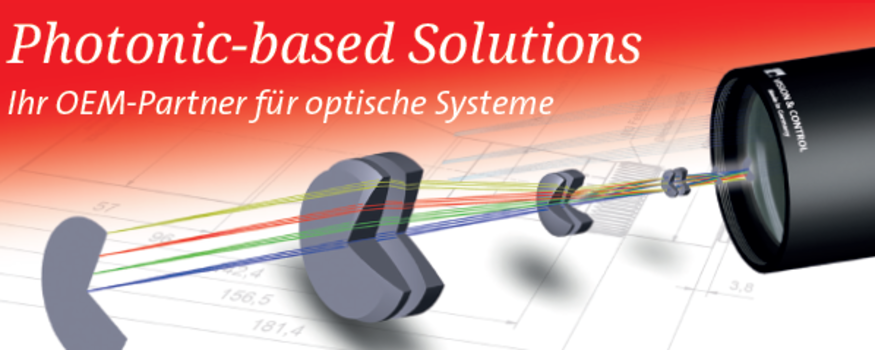
That’s what makes the difference:
- Extensive standard portfolio – Made in Germany – Development and manufacture at our site in Thuringia
- Our expertise in the field of image processing components enables us to create complex, bespoke optical systems
- Our understanding of our customers’ applications stems from a large number of customer discussions and projects
- The ability to combine imaging and illumination optics enables precise and robust inspection systems
Your challenge, our service: whether it’s adapting a standard product or developing a completely new solution, we’re happy to support you with bespoke products
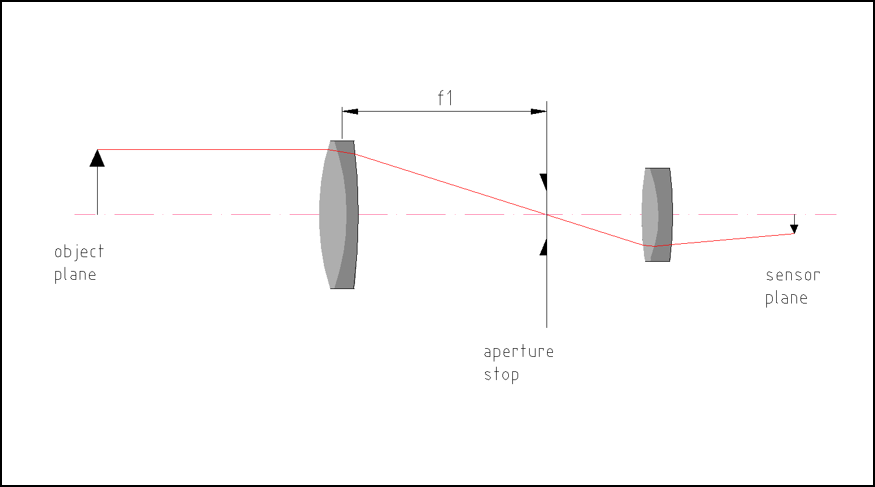
Object-side telecentric lenses
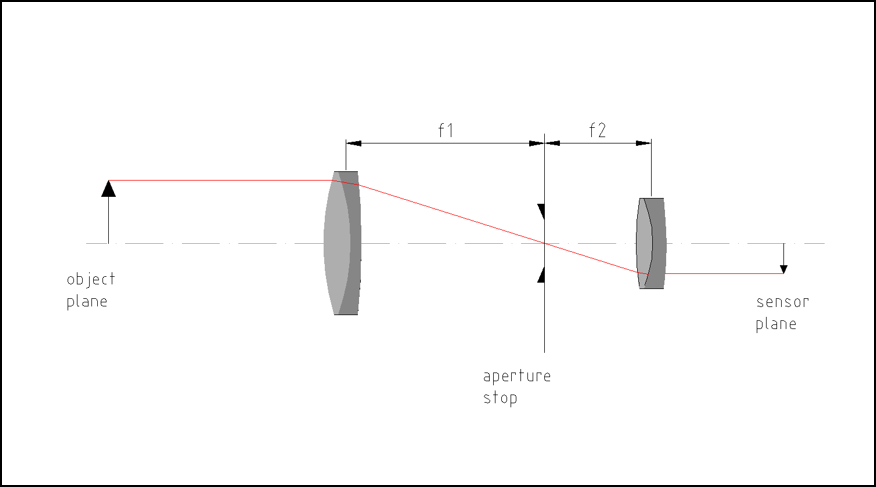
Object-side telecentric lenses enable high measurement accuracy because, due to their parallel principal ray path, there is no change in the reproduction ratio within the depth of field. This is achieved by positioning the aperture diaphragm at the rear focal point of the front lens.
Image-side telecentric lenses
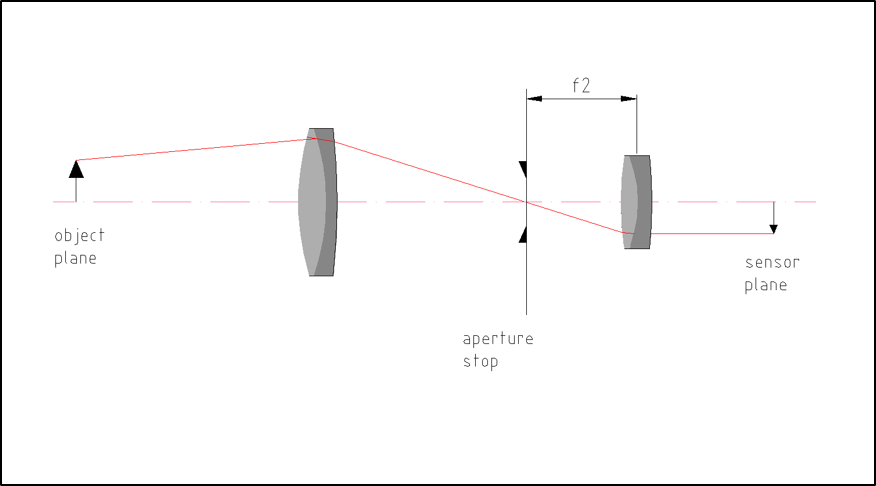
Image-side telecentric lenses are used when a parallel beam path toward the camera is required. As a result, the magnification remains constant even when the sensor distance changes; only the working distance on the object side varies. This is achieved by positioning the aperture diaphragm at the front focal point of the rear lens. On the image side, all rays strike the sensor perpendicularly, which minimizes edge falloff.
Lenses for use with liquid lenses
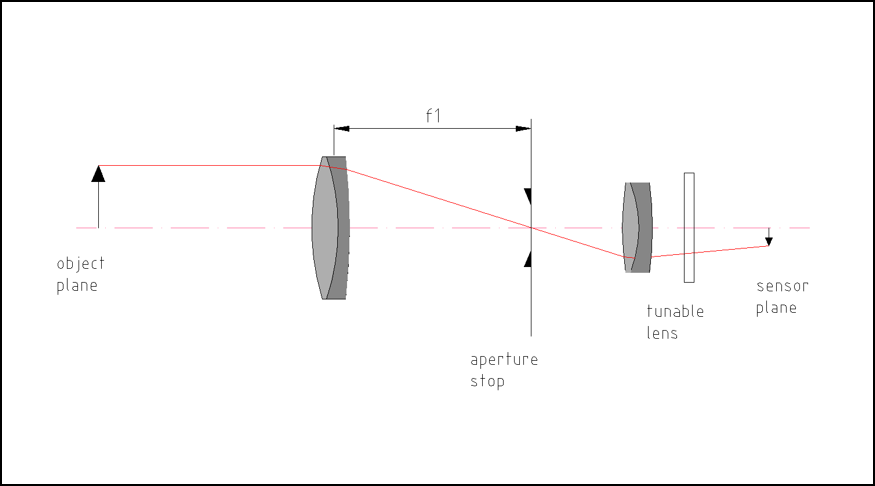
Lenses with integrated liquid lenses enable rapid changes in focus without moving parts. This is advantageous, for example, when the depth of field is shallow or objects have very deep structures. Eccentric lenses can also be equipped with this technology.
The liquid lens is preferably inserted at the camera-side end of the system. This ensures that the optical path within the lens remains unchanged and its correction is not affected.
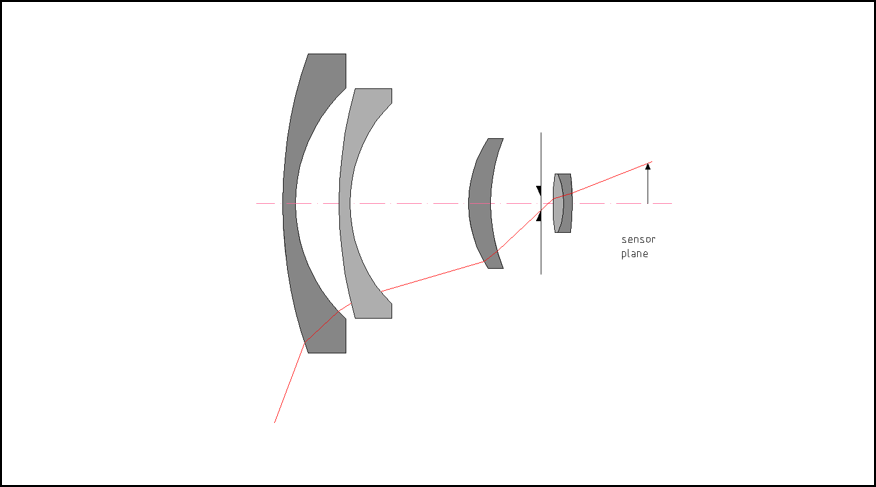
Wide-angle lenses (fish-eye)
Wide-angle lenses are used for applications that require a large field of view. Fish-eye lenses are an extreme form of wide-angle optics. They can be designed for image angles of over 180° and are used, for example, in the inspection of boreholes.
With a retrofocal design, the flange focal distance on the camera side is greater than the focal length. This allows the use of cameras with a conventional flange focal distance.

Entocentric lenses
Entocentric lenses are typically mass-produced for photography and surveillance cameras. However, there are a number of specialized requirements that “off-the-shelf” entocentric lenses cannot meet, and addressing these through our OEM service delivers real value to our customers.
- Entocentric lenses with a high magnification ratio – 1 and above – for high-resolution imaging.
- Entocentric lenses with specialised focal lengths, including both particularly short and particularly long focal lengths.
- Entocentric lenses for specific wavelengths (e.g. 450 nm or 1600–1800 nm) or specific spectral ranges (SWIR, MWIR, UV).
Microscope lenses
Due to their high numerical aperture, microscope objectives offer high resolution, enabling the imaging of very fine structures using both transmitted and reflected light. They are typically magnifying.
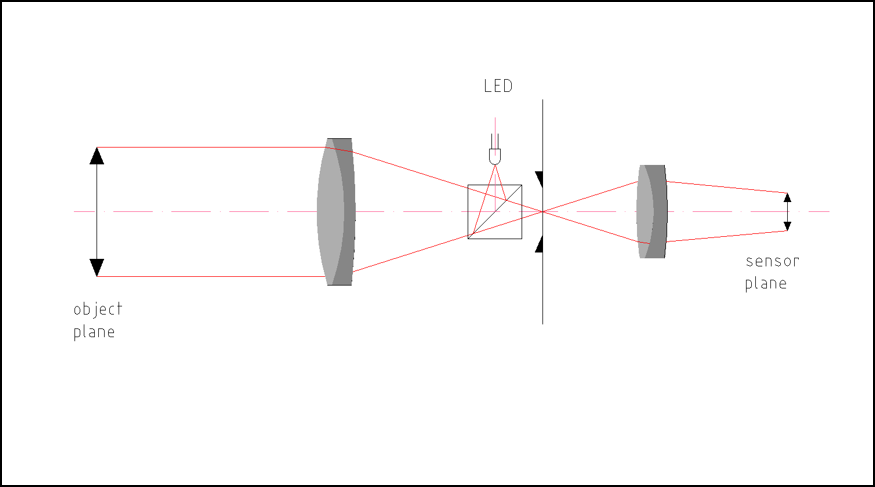
For use with reflected light, coaxial illumination via a mirror is an option.
We are happy to accommodate custom requirements, such as high numerical aperture and longer working distances.
Lenses for large sensors or line sensors
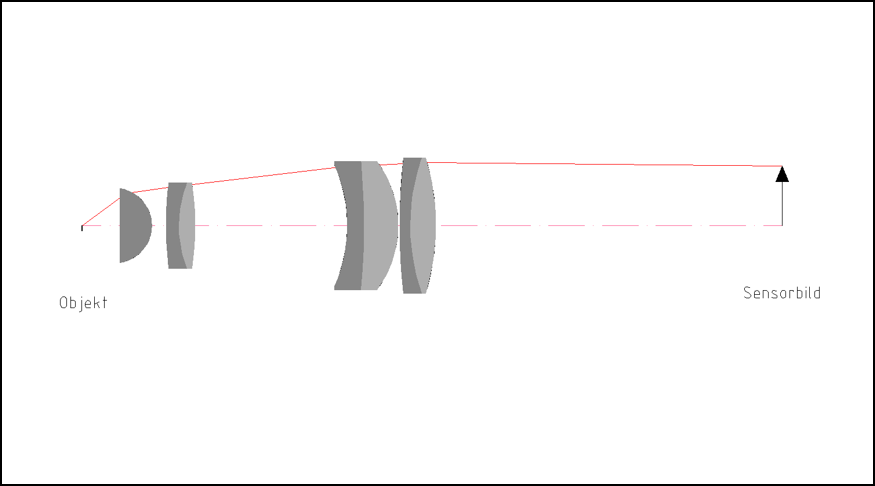
The use of large-format sensors and large line-scan and TDI sensors places specific demands on the optical design and construction of both telecentric and non-telecentric lenses. Full-frame sensors with image diagonals ranging from 43.3 mm to just under 70 mm are steadily finding their way into industrial applications,
as are line scan and TDI sensors with widths of up to 82 mm.
We apply our technology and expertise to these requirements in order to contribute to the development of new ideas for optical applications.
Optical systems for laser applications
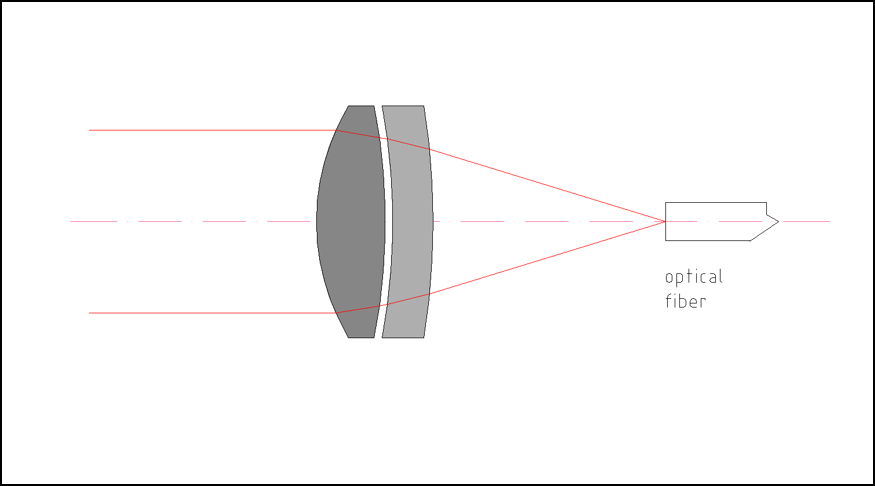
Lasers produce a coherent and virtually parallel beam of light. Special optical systems, such as beam expanders, are used for this purpose. In addition, F-theta lenses are used to convert the rotation of a tilting mirror into the linear displacement of a laser beam. Furthermore, uncemented high-performance achromatic lenses are used for coupling the laser into fiber optics.
![[Translate to English:] Prinzip Multiaperturobjektive](/fileadmin/user_upload/Technologie/Optikentwicklung/Multiaperturobjektive.JPG "[Translate to English:] Multiaperturobjektive")
Multi-aperture lenses
Multi-aperture lenses are designed for specialised applications in which different wavelengths are directed from a single lens into different camera systems. This enables multiple image processing applications to be carried out at a single inspection station. The different wavelengths are split using specific optical elements, such as dichroic mirrors.
This results in space and time savings in the context of fully automated manufacturing.
Perizentric lenses
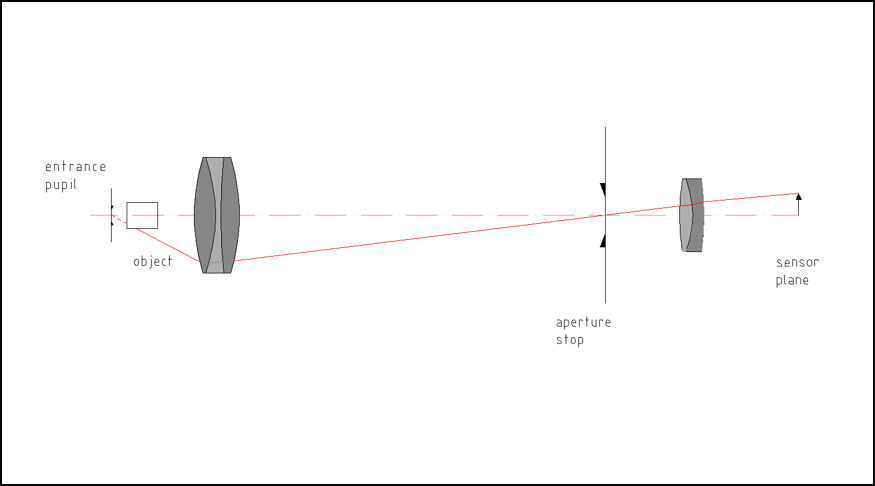
Perizentric lenses reverse the usual visual impression; they essentially look around the object, revealing its outer surfaces. In this case, the entrance pupil (the image of the aperture diaphragm) is located in front of the lens. Naturally, the front element of the lens must be significantly larger than the object.
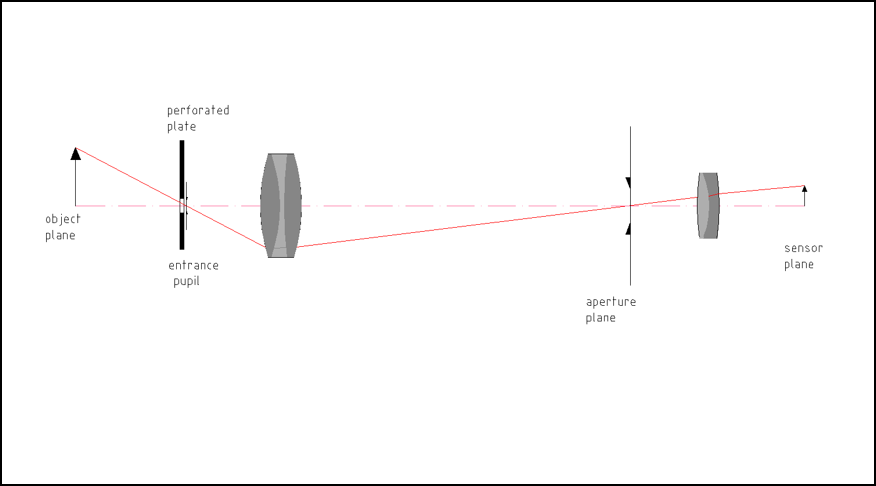
“Keyhole” lenses
A special type of pericentric lens is the “keyhole” lens, in which the entrance pupil is also located in front of the front element. Since all light rays pass through the aperture, they all converge at the entrance pupil as its image. With this arrangement, one can look through a small hole if it is located within the entrance pupil.
Scheimpflug lenses
Scheimpflug lenses are designed and used to image inclined, non-planar objects onto a sensor plane that is also inclined. This specialised optical path design enables optimum image quality and accurate measurements despite the unusual arrangement of the object and the optics. A Scheimpflug adapter allows the lens to be connected to a standard camera on the image side.